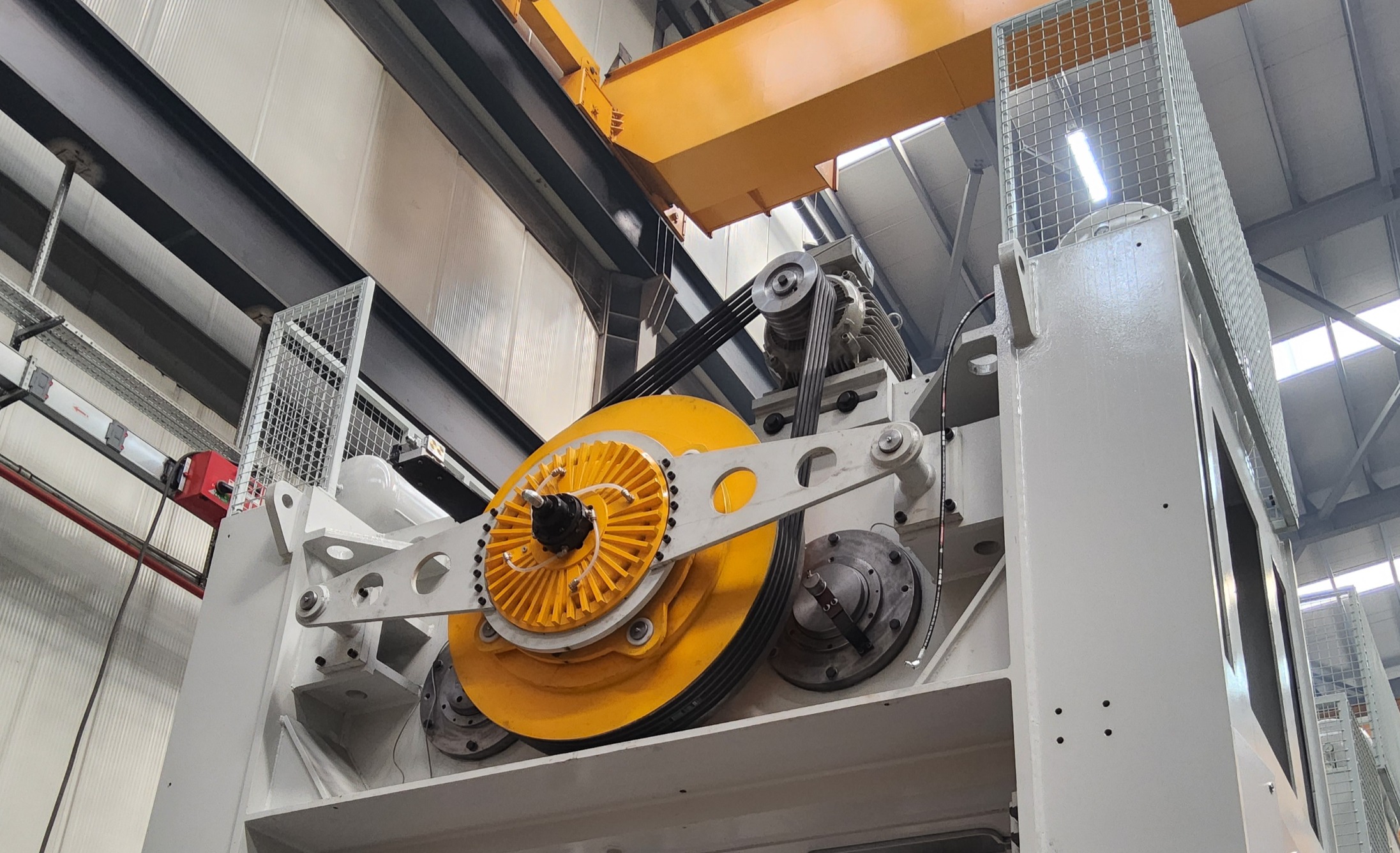
Egypt’s manufacturing sector is expanding fast. From the 10th of Ramadan industrial corridor to Borg el-Arab near Alexandria, factories are investing in new metal forming capacity. But buying a mechanical press is not like ordering a standard machine — and the mistakes made at the procurement stage are expensive, sometimes irreversible.
After years of managing press procurement for manufacturers in Egypt and across the MENA region — including commissioning work at the BSH Cairo factory (oven production lines) — we’ve seen the same critical errors repeat themselves. This article breaks down the top five, so you don’t have to learn them the hard way.
Mistake 1: Buying on Price Alone Without Verifying the Specification
The press market is full of options at wildly different price points. Egyptian buyers, under pressure to minimize capital expenditure, often select the lowest bidder without cross-checking the technical specification against their actual production requirements.
What goes wrong: A press rated at 160 tons on paper may have a rated tonnage point at only 3 mm above bottom dead center. If your process needs full tonnage at 6 mm (which is standard for deep drawing operations), you’re running an undersized machine from day one — destroying tools, causing crankshaft overload, and voiding your warranty.
What to do instead: Require the supplier to provide the full tonnage-height curve, not just the headline tonnage figure. Calculate your required tonnage at the actual working point of your die. If the supplier can’t provide this data, walk away.
Mistake 2: Skipping the Factory Acceptance Test (FAT)
Many Egyptian buyers — especially smaller factories — skip the Factory Acceptance Test because they assume it’s an unnecessary expense and delay. They accept a press based on a specification sheet and some photos.
What goes wrong: Without an FAT, you have no verified record that the machine meets the stated tonnage, stroke length, or strokes per minute. Safety circuits (two-hand control, light curtain interface, emergency stop) are not independently verified. Defects discovered only after the machine arrives in Egypt are expensive to fix — the manufacturer is thousands of kilometres away, spare parts take weeks, and your production line is standing still.
What to do instead: Insist on an FAT. Have a qualified engineer attend on your behalf if you cannot travel. The cost of an FAT is trivial compared to even a single week of unplanned downtime in Egypt. At Demirezen Engineering, we attend every FAT as a standard part of our project management scope.
Mistake 3: Ignoring Import Regulations and Customs Requirements
Turkey is one of the best sources for mechanical presses — CE-certified, competitively priced, and geographically close. But Egypt has import regulations that catch buyers off guard.
What goes wrong: Importing a press without the correct conformity documentation (Egyptian Standardization and Quality Control Authority — GOEIC requirements) can result in the machine being held at Alexandria or Damietta port for weeks or months. Some buyers discover after the machine ships that they need additional Arabic documentation, specific labeling, or a local certification agent.
What to do instead: Before you issue the purchase order, verify the exact documentation package required for importing machinery into Egypt — including GOEIC conformity, CE Declaration of Conformity, test certificates, and packing documentation. With Turkish-made presses, the A.TR and EUR.1 certificates reduce customs duty significantly, but these must be requested from the manufacturer before shipment.
Mistake 4: Underestimating Foundation and Site Preparation Requirements
A mechanical press is not a plug-and-play machine. A 200-ton H-type press might weigh 15–20 tonnes and generate significant dynamic forces during operation. Many Egyptian factory managers, focused on the machine purchase, leave site preparation as an afterthought.
What goes wrong: The press arrives, but the foundation hasn’t been prepared. The machine sits in the warehouse for weeks while civil works are done — delaying production and incurring storage costs. Or worse: the press is installed on an inadequate foundation, causing vibration problems, tool wear, and premature bearing failure.
What to do instead: Request the manufacturer’s foundation drawing at the quotation stage — not after you place the order. Have your civil contractor review it immediately. Foundation concrete typically needs 28 days to cure before machine installation, so this is on the critical path of your project.
Mistake 5: Buying Without After-Sales Support Coverage
A press is a 20–30 year asset. The real cost of ownership isn’t the purchase price — it’s what happens when something breaks, and how fast you can fix it.
What goes wrong: Some Egyptian buyers purchase presses from suppliers who have no local presence, no Arabic-speaking support, and no reliable spare parts supply chain to Egypt. When the clutch-brake needs servicing or an electrical board fails, they’re stuck waiting weeks for parts and communicating in a language neither party speaks fluently.
What to do instead: Before committing to a supplier, ask: Who will support this machine in Egypt? Where do spare parts come from? What’s the lead time for critical components? At Demirezen Engineering, we act as the single point of contact for the full lifecycle — from specification through commissioning to ongoing maintenance coordination. Our team has on-the-ground experience in Egypt and we manage the full spare parts supply chain.
The Bottom Line
Buying a mechanical press for your Egyptian factory is a major capital decision. The upfront price is only part of the story — specification accuracy, FAT, customs documentation, site preparation, and after-sales support all determine whether your investment pays off in years or in decades.
If you’re evaluating press procurement for a facility in Cairo, 10th of Ramadan, Borg el-Arab, or anywhere in Egypt, we’re happy to provide a no-obligation technical pre-assessment.
Request a Technical Pre-Assessment →
Demirezen Engineering provides full-scope press procurement management for manufacturers across MENA. We are an authorized project management partner for the Germak eccentric press series and have direct commissioning experience in Egypt.