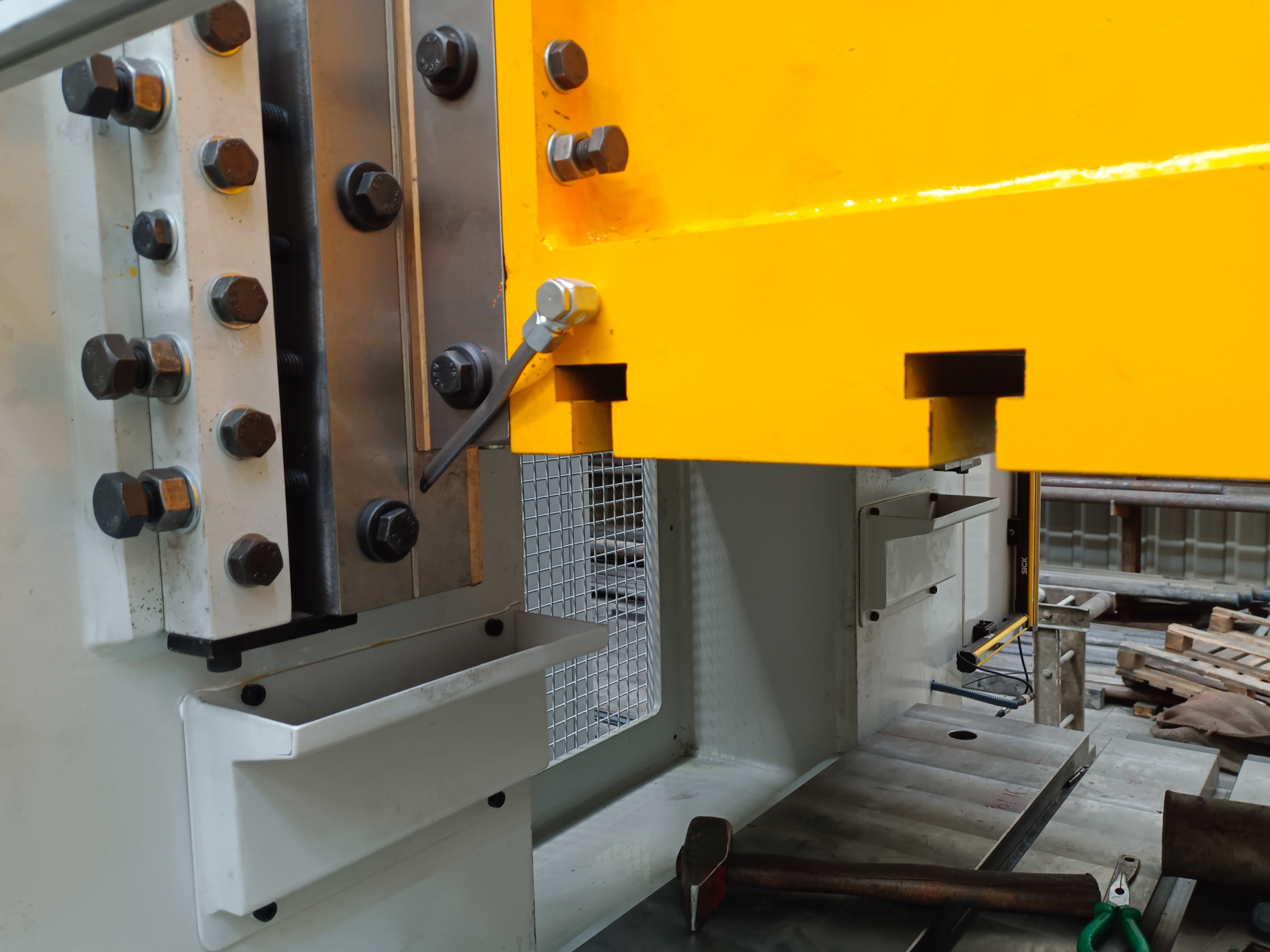
1. Key Press Design Elements for Parallelism Under Off-Center Loading
The two key press design elements that resist off-center loading throughout the stroke are the pressure points and the press guides. Both are critical to consistent part quality and tool life. They play a key role in maintaining parallelism not only at bottom dead center but throughout the entire working stroke.
2. Number and Location of Press Ram Connection Points
The pressure point, or ram-rod connection point, is the most important point where the ram receives support against off-center loading. Presses are typically designed with one, two or four pressure points.
In general, the design will increase the pressure point from one to two when the table length exceeds 1.5 m from left to right, and from two to four when it exceeds 2 m from front to back. Single-pressure point presses, especially C-type presses, are widely used in industry for smaller and less complex dies, while two- and four-pressure point presses allow the centering of off-center loads between the pressure points when pressing large progressive or transfer dies.
The distance between the connection points is very important; the greater the distance between them, the greater the resistance of the press to off-center loads.
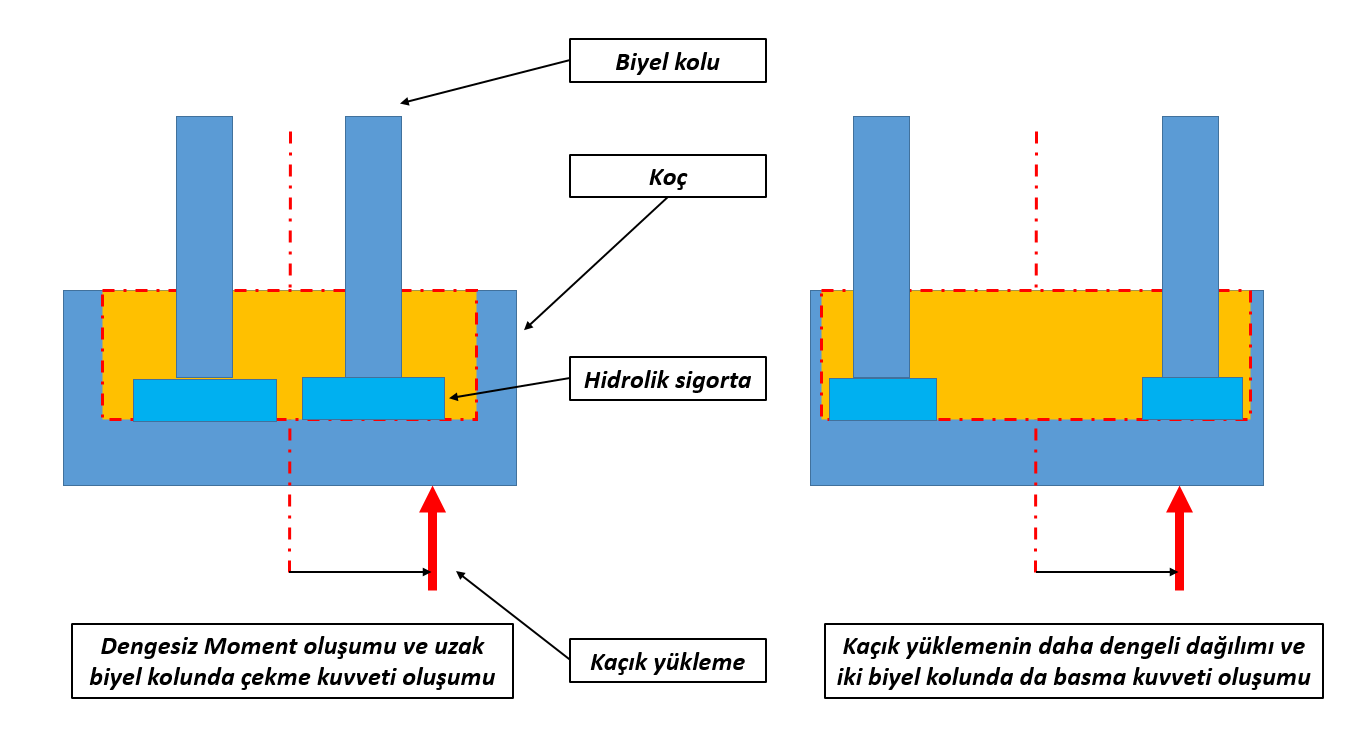 Kaçık yüklemelerde biyel kolları arasındaki mesafenin önemi ve pres paralelliği
3. Available Guidance Systems
Guidance systems typically include four, six or eight surfaces of guidance. Historically, these guide slides were equipped with hydrodynamically lubricated linear bronze wedge liners. Recently, roller guide systems have been introduced, which eliminate the clearances and lubrication required in the bronze liner system.
Die guide columns and bushings, while necessary during mold construction, maintenance and adjustment, do not have sufficient strength to be the primary guidance system for the stamping process.
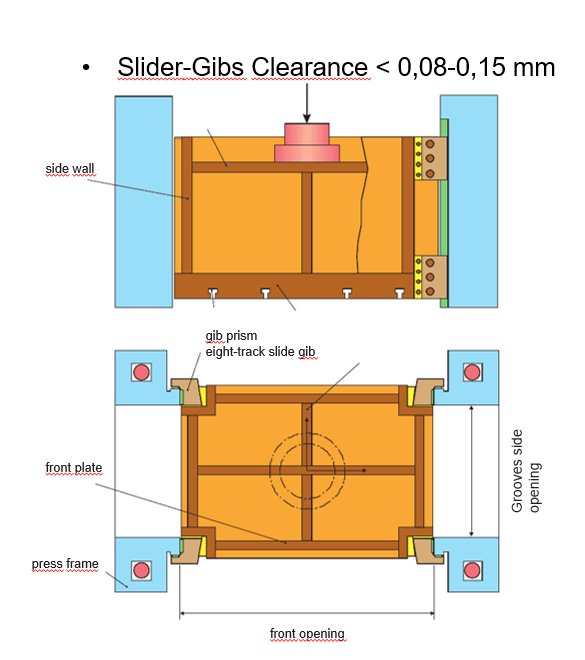 Pres koçu kılavuz yapısı ve kılavuzlar arası boşluk
4. Guide Features Affecting Parallelism
Off-center loads tend to rotate the ram, thus applying increased pressure to the bottom of the guides on the high-load side and the top of the guides on the low-load side. To provide optimum resistance, it is important to have reduced or zero clearance in the slide system. Additionally, increasing the distance between the top and bottom of the slide guides increases torsional resistance to the loads.
5. Benefits of Roller Guide Systems
The benefits of a zero clearance system include:
- Resistance to off-center loads
- Improved part quality and tool life
- Elimination of press lubrication on guide surfaces
- Prevention of cross-contamination of press and die lubricants
- Beneficial when pressing stainless steel, brushed and polished aluminum, and pre-coated materials
Emrah Demirezen — Metal Forming Expert, Press Designer
info@demirezenengineering.com